← Back to What's New
June 6, 20262 min read
Weekly Update June 6, 2026
This week WatDis focused on making large networks easier to browse, making diagnostics less disruptive during inspection, and tightening script loading in watdis-next without pretending a solver breakthrough shipped.
EN
Ver en españolwatdiscanvasdiagnosticsperformancesecurity
Highlights
-
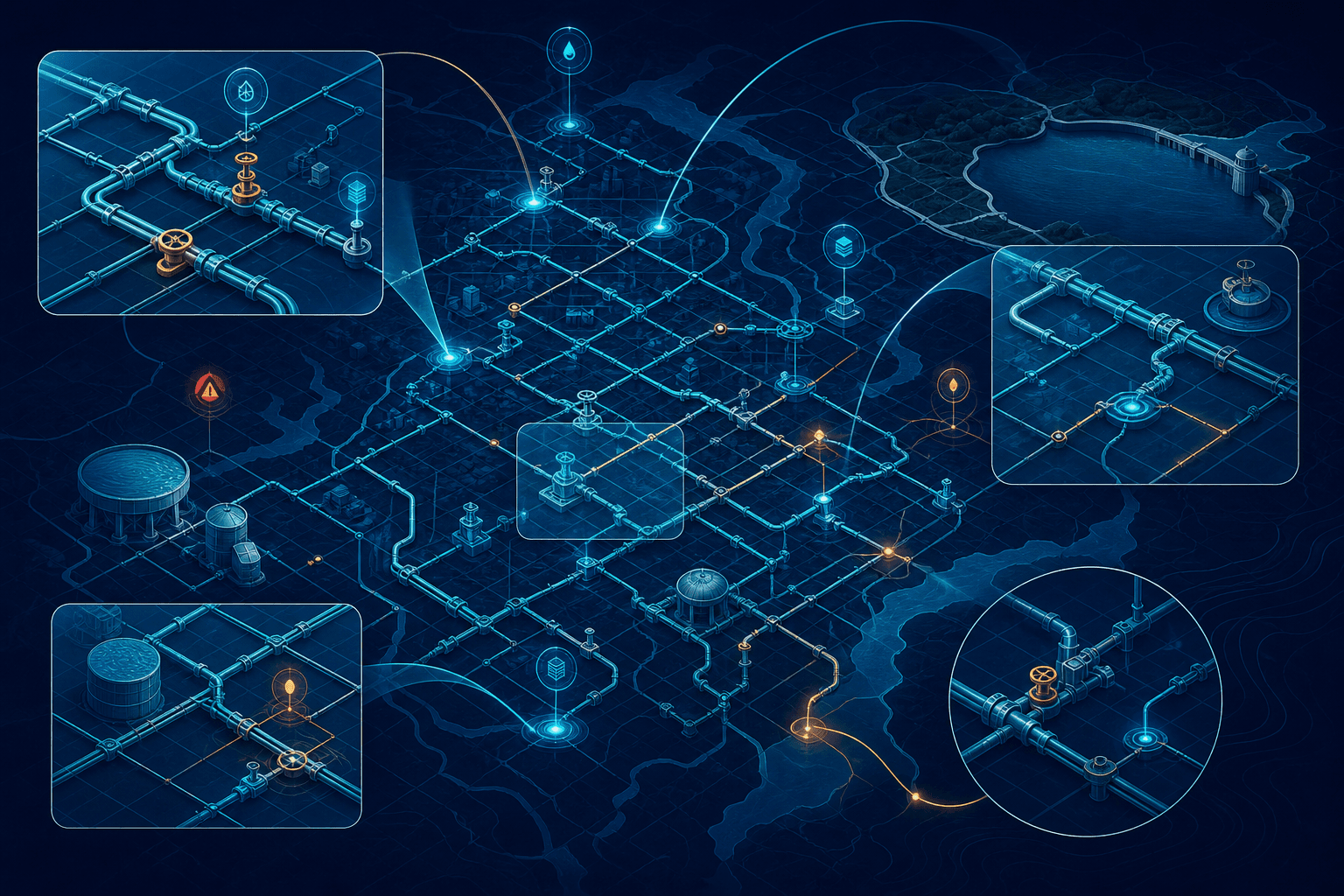
WatDis strengthens dense-network browsing with overview rendering, viewport-aware drawing, and smoother pan/zoom preview paths.
-
On large models, Diagnostics no longer auto-runs QA by default and now cleanly separates Zoom from Open Props.
-
watdis-next adds a tighter script policy and better canvas signals for follow-up validation without overstating the current production story.
What's New (By Category)
UI/UX
- The canvas now combines an overview mode with adaptive detail thresholds so large models do not pay the same drawing cost at every zoom level.
- During pan and zoom, the preview path is lighter and the viewport is committed more atomically once the gesture settles.
- The practical goal is straightforward: make large-network exploration feel less heavy before deeper analysis begins.
QA and Diagnostics
- On large networks, QA checks stay available on demand and before hydraulic runs instead of auto-running during import or browsing.
- Diagnostics findings now split Zoom from Open Props: one action navigates; the other opens the inspector without moving the viewport.
- View-only actions no longer pollute undo history, which removes avoidable cost while inspecting large models.
Performance and Observability
- The shipped work adds viewport culling,
requestAnimationFramecoalescing, and local canvas stats for visible-node, visible-link, and draw-time follow-up. - The honest story this week is responsiveness hardening and observability, not a finished production benchmark claim.
Security and Hardening
- watdis-next now includes a minimal CSP that restricts script origins to approved sources while preserving compatibility with the current runtime.
- This is real hardening, but not a claim of perfect isolation: the current runtime still requires
unsafe-eval.
Coming Next
- Re-test Barranquilla after redeploy to confirm the real browsing impact on a dense production-scale model.
- Profile hover and hit-testing only if the model still feels heavy after this optimization pass.
- Keep solver and planning work out of public claims until measured runtime behavior actually changes.